For the 2E and G/T, privacy concerns matter.
Even more than for other populations, specific action is needed.
Advanced intellect can outpace emotional maturity and social judgment.
Intense passions and insufficient impulse control, without understanding the social or long-term consequences result
in additional vulnerability and risk.
Meaning, in simpler words: social media?, not so good.
LSC follows the Power Of We way to define actions to be the same for all, also promoting safer choices regarding social media.
The world is a-changing.
We do care about privacy; we take it seriously, maybe because it poses direct concerns for safety and wellness. "It didn't use to be that way." Perhaps. Who cares. The fact is that things are getting worser and worser, pardon my French.
The funny thing is, the additional need for protecting kids' privacy happens exactly at the same moment in life and for the same reasons that the biggest dream for immature folks today is to become an online influencer, by definition someone who represents a fake image of self, just as most of that lifestyle, of having no privacy at all...
So, rhetorical question follows: how do we adapt and encourage a kid's interests and the natural desire to experiment and test limits, when those selfsame interests and desires can be so destructive to self and others?
Our honest attempt at an answer, my friend, is the same as with everything else: self-awareness, maturity, principles, values, proactive action.
Among LSC's important principles is the one about eating our own cat food. Translation: no hypocrisy. None of that I say this while I do that.
"Let your yes be yes, and your no be no" is in the Bible; also that Commandment about not lying; Jesus' upset regarding false appearances that hide bad behavior or bad intentions. In practical ways, LSC corporate action and expectations regarding privacy are the same as what we expect staff and campers to follow. A rule that is set for kids is the same that we have for grown-ups and for our main website and any media.
Namely: no personal information is published. None, nada, of anybody. No pictures of smiling kids having fun at camp, too bad, all other websites for camps look so much better...
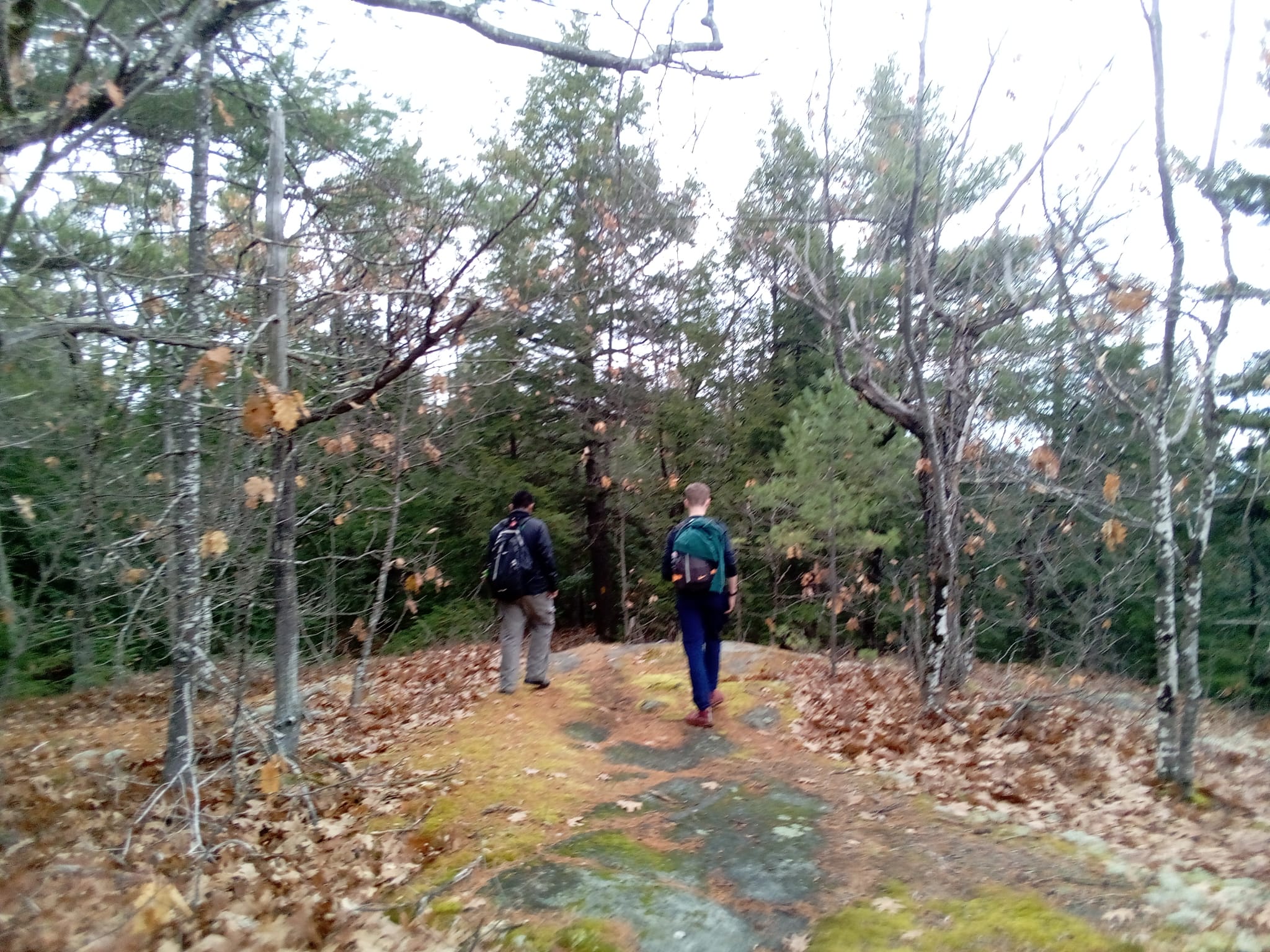
Public pictures of camp activities are quite OK, but only if the people, especially minors, are not recognizable. See the picture on top? Two teens, hiking up a New Hampshire mountain in November to build up skill and stamina for going up Mt. Washington in June. Good picture, if I may say so. Those who need to know, know who these kids are. To the rest of the world, their privacy is reasonably respected. Get the idea?
Privacy isn't about hiding—it's about controlling the narrative.
We request that parents help us in this effort.
Interestingly, one of us was a TV actor, radio journalist; this thing about not "being public" is quite a change... Most camps have a "who we are" page with staff profiles. Maybe we'll have nicknames there, or like scouts in occupied Poland during WW2, "totem" names. Some of that information about staff interests and skills is useful. Parents should be able to know at least who the camp director is, by name. No problem, just contact us, we'll share that with you. In private. Just like our actual address. Social media for the camp? not likely.
Parents, grandparents deserve those candid snapshots, those smiles of their kids at camp. We'll have them, and we'll make all reasonable effort to get them to the right parents only, with a firm request not to post on public social media, not to break the effort that we are all making to keep your kids safe. While this is part of our signed agreement, we ask you to honor this not because of a signature, but because it's the right thing to do.
Is this an exaggeration?
No, it isn't, if the way to the goal is to build a safe place, a place where an important life skill to learn and practice is how to stay safe online. What we teach, we don't "teach" in that artificial way common elsewhere. At LSC, we learn by encouraging example. We all model it. We ask of our staff to adopt this life skill into our own lives if we haven't already, then it becomes natural for all of us to share about these issues with our campers, who appreciate that we are "for real." Because we do what we say. Then we all do it, and that's the way it should be
Besides increased safety and well-being, a more relaxed atmosphere and trust because nobody will post any embarrassing videos, there are some other fringe benefits. No need for a fake look while at camp, like excessive makeup, because there is no need to be ready for a closeup shot by Mr. DeMille...
As to obsessive media consumption, that kryptonite for otherwise bright kids to successfuly make them just as mediocre as the rest, we address it like kryptonite is addressed.
Now, and this is very important: again, we are not hiding away from online life. We do intend very lively and active social media accounts, as soon as we hire the right instructor, if there a campers interested in quality media work. No personal information or faces, private-group with blocked forwarding, just for families, put together by our kids and staff. This, because we do encourage campers who want to become proficient using media tools, with intentional safe and privacy mindsets. We have a staff who loved running lights and props for her high school theater productions, and another who was making production-level papier-mache masks at 9 years old. Theater with masks, as one of our activities? Totally possible! A former instructor for stop-frame animated movies in Austin, TX, is available. And so on and on. Consider also how liberating it can be for a very shy youth to be able to perform "without being noticed."
Privacy is not about denying the realities of this digitally and media connected world. It's about refusing to be bait, refusing to be prey, while building empowering skills to enable that option. Even to stay safe in case we choose to develop and be creative using those digital tools and platforms. Much better than being used by them.